
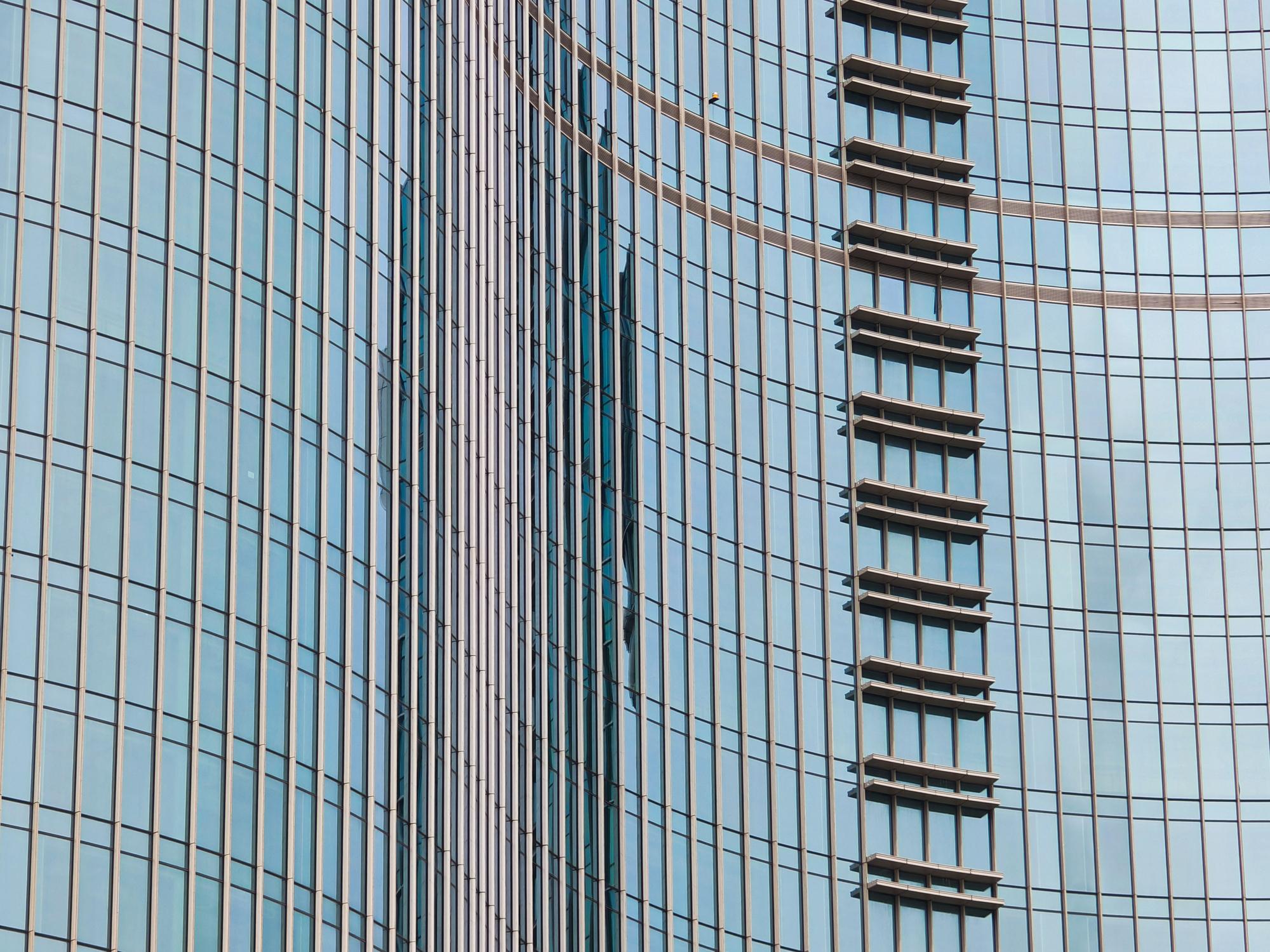
Glass facades are a defining feature of modern skyscrapers. Their reflective surfaces create an elegant appearance and distinctive architectural identity. Yet, glass serves purposes beyond aesthetics. It also influences natural lighting, indoor comfort, and building energy performance.
1. Maximizing Natural Light
One of the main advantages of glass is its ability to bring daylight into interior spaces. With careful planning, natural light can reduce the need for artificial lighting during daytime hours.
It can also make interior environments feel more open and connected to the surrounding city. The right glass specification and interior layout help balance brightness, privacy, and visual comfort.
2. Creating a Distinctive Architectural Identity
Glass reflects the sky, sunlight, and nearby buildings. These reflections change throughout the day, giving skyscrapers a dynamic appearance.
On tall buildings, glass can also emphasize vertical lines and architectural proportions. The result is a contemporary aesthetic that contributes to the visual character of an urban skyline.
3. Managing Solar Heat and Energy Use
Despite its visual appeal, glass can allow unwanted solar heat to enter a building. This can increase indoor temperatures and cooling demand.
Modern glazing systems address this challenge through specialized coatings and carefully selected glass specifications. Exterior shading elements can also help control direct sunlight while preserving useful daylight.
However, glass does not automatically make a building energy-efficient. Performance depends on the glazing system, building orientation, shading strategy, and overall design.
4. Addressing the Challenges of Building at Height
Designing a skyscraper facade requires careful technical planning. Engineers must consider wind pressure, water resistance, structural movement, and indoor comfort.
Maintenance is another important factor. Safe access and cleaning systems must be considered during the design stage, supporting long-term building performance.
Autograph Tower in Jakarta’s Urban Landscape
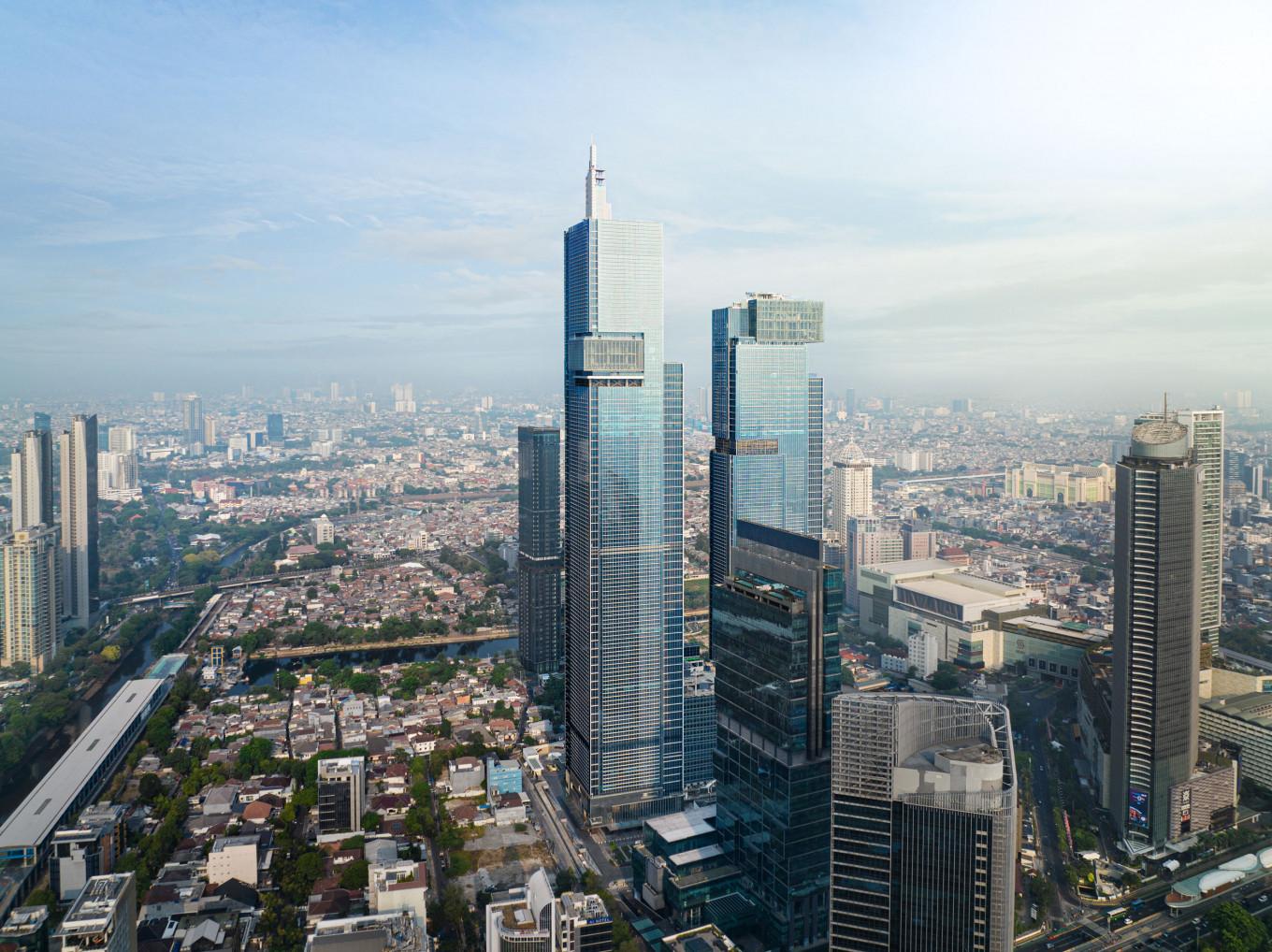
These architectural principles can be observed at Autograph Tower, part of Thamrin Nine Complex. According to the Council on Tall Buildings and Urban Habitat (CTBUH), the tower features layered, silver-blue glass cladding. Its horizontal fins also contribute to passive shading.
This design demonstrates how visual identity and technical considerations can work together in high-rise architecture.
From UP at Thamrin Nine, visitors can take in Jakarta’s expansive skyline and observe how modern buildings shape the city. Seen from above, each facade becomes part of a larger architectural landscape.
Glass is therefore more than an exterior finish. It is an integral design element that connects a building’s appearance, indoor environment, and relationship with the city.